Why do different countries have different shipping rules? The answer begins with geography, public safety, national policy, and local commerce. A parcel moving from Tokyo to Toronto may face different duties, labeling requirements, and inspection procedures than one traveling from London to Sydney. Each border reflects its country’s priorities.
Customs expert Kunio Mikuriya, former Secretary General of the World Customs Organization, described customs as “at the heart of the global supply chain.” That simple observation explains why shipping rules matter. Customs officers protect consumers, collect taxes, verify product information, and manage risk. Their work can affect a package containing cosmetics, batteries, food, or ordinary clothing.
Small details can create major delays. An incomplete commercial invoice may stop a shipment. An unclear product description may trigger manual inspection. Even the declared value can change the final delivery cost. Rules also evolve when governments respond to safety concerns, environmental goals, or economic pressure.
This guide explores seven practical reasons behind these differences. It will examine tariffs, restricted materials, documentation, product standards, carrier policies, and customs enforcement. It will also show how businesses can prepare more carefully.
Shipping is not perfectly predictable. Mistakes still happen. Regulations can be difficult to read. Yet better preparation reduces avoidable problems. Checking official customs sources, confirming carrier instructions, and keeping accurate records are sensible starting points for international sellers and buyers.
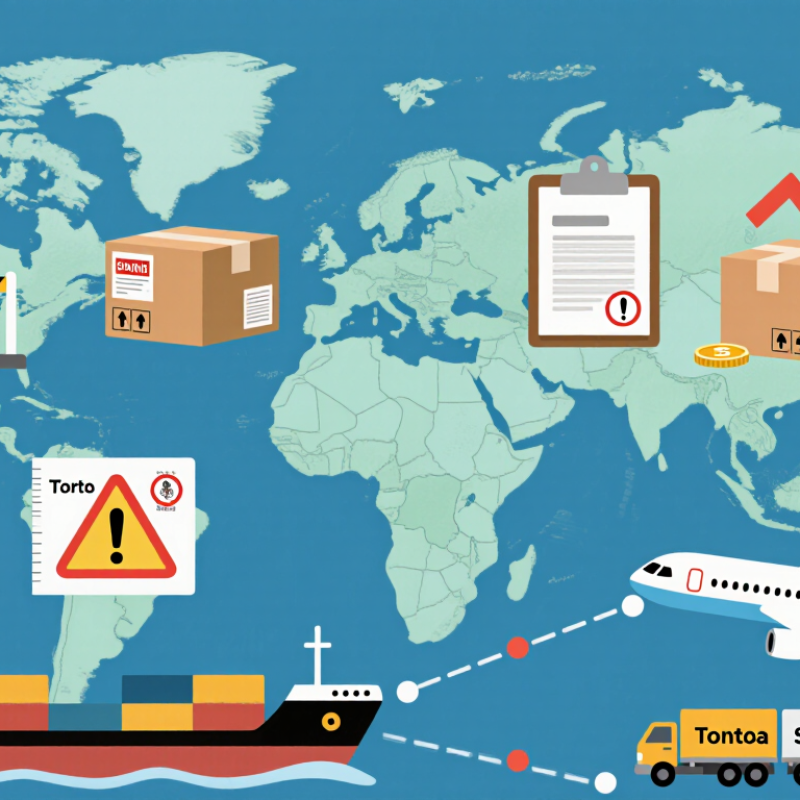
7 Tips Why Different Countries Have Different Shipping Rules?
Map Local Customs Systems: WCO’s HS Covers Over 98% of World Trade
A parcel can leave one port smoothly and face questions at another. The key difference is usually local customs design, not distance. The World Customs Organization states that the Harmonized System supports more than 98% of world trade. Its six-digit structure gives products a shared language. Yet many customs authorities add national digits, taxes, permits, or statistical codes.
Check the HS code before booking transport. Confirm the product description, material, intended use, value, origin, and package quantity. A vague description creates delays. “Metal parts” is weak; “stainless-steel kitchen hinges” is clearer. Match the commercial invoice with the packing list. Small inconsistencies matter. I have seen a one-word mismatch trigger manual review, although the shipment itself was ordinary.
Local systems also reflect national priorities. The World Bank’s Logistics Performance Index 2023 links stronger customs processes with better supply-chain reliability. UNCTAD’s Review of Maritime Transport reports that over 80% of global merchandise trade by volume moves by sea, so port procedures can affect a wide range of businesses. Check duty rules, valuation methods, labeling standards, and return procedures for every destination. Keep evidence for the declared origin. Do not assume a neighboring country uses identical rules. That assumption fails often. Build a local checklist, review it with a qualified customs professional, and update it when tariff schedules change. There is no perfect shortcut.
| Tip | Customs Dimension | Why Countries Differ | Verified Data Point | Practical Shipping Action |
|---|---|---|---|---|
| 1 Classify the product correctly | Harmonized System (HS) classification | Countries use the international HS structure as a common foundation, but they can add national tariff subdivisions and apply different duty rates. | The HS is an international product nomenclature organized at six-digit level and is used for more than 98% of world merchandise trade. The international HS structure is reviewed on a five-year cycle. | Identify the correct six-digit HS code first, then check the destination country’s additional tariff digits, duty rate, import controls, and statistical requirements. |
| 2 Check duties and taxes separately | Customs duty, import VAT, GST, or sales tax | Tax systems are set by national law. Some destinations charge customs duty and an import consumption tax, while others apply exemptions or reduced rates to selected goods. | Import taxes are generally determined using a combination of the product classification, customs value, origin, and applicable national tax rules. A duty-free shipment is not automatically tax-free. | Estimate customs duty and import tax as separate amounts before shipping, and confirm whether the recipient or importer is responsible for payment. |
| 3 Map low-value shipment thresholds | De minimis and simplified-entry rules | Each country sets its own threshold and conditions for low-value imports. The threshold may differ for duty, tax, and formal customs entry. | There is no single worldwide de minimis value. Some destinations provide relief for certain low-value imports, while others collect taxes or require declarations from the first unit of currency. | Check the destination’s current thresholds, currency conversion method, excluded product categories, and whether multiple parcels may be treated as one consignment. |
| 4 Confirm product restrictions | Prohibited, restricted, licensed, or inspected goods | Governments regulate goods connected with health, safety, agriculture, environmental protection, national security, and consumer protection. | Commonly controlled categories include food, medicines, plants, seeds, animal products, chemicals, firearms, dangerous goods, and products containing lithium batteries. Requirements vary by destination and product specification. | Review import permits, safety certificates, labeling rules, quarantine controls, and transport restrictions before accepting an order. |
| 5 Prove the country of origin | Preferential and non-preferential origin | Origin is based on where goods are wholly obtained or sufficiently transformed, not simply where they were shipped from. Trade agreements can create different duty treatment. | Origin rules may use tariff changes, regional value content, specific processing requirements, or a combination of these tests. The applicable rule depends on the product and trade arrangement. | Keep manufacturing records, supplier declarations, bills of materials, and origin statements needed to support the claimed origin and any preferential rate. |
| 6 Declare the customs value accurately | Transaction value and valuation adjustments | Customs authorities need a consistent basis for calculating duty and tax. National procedures may require additions such as assists, royalties, commissions, freight, insurance, or packing costs. | Under the international customs valuation framework, the transaction value is the primary method when applicable. If it cannot be used, alternative valuation methods are applied in a prescribed order. | Use the actual price paid or payable where appropriate, state the currency clearly, and retain invoices, payment evidence, freight costs, and related-party pricing support. |
| 7 Prepare complete documents | Entry data, records, and clearance procedures | Customs systems differ in filing format, data fields, inspection procedures, language requirements, and who may act as the importer of record. | A typical international shipment may require a commercial invoice, packing list, transport document, accurate consignee details, HS code, origin information, value, and permits or certificates when applicable. | Match all documents exactly, describe the goods precisely, avoid vague terms such as “miscellaneous,” and retain customs records for the period required by the destination jurisdiction. |
It identifies when reduced or waived import charges may apply. It is not always tax-free. Taxes can still be collected.
Each country uses different customs and tax rules. A €145 parcel may avoid customs duty in the European Union. Value-added tax can still apply.
The United States generally uses an $800 threshold for qualifying low-value imports. Australia applies goods and services tax rules up to A$1,000. The United Kingdom mainly uses a £135 import threshold. Rules may change.
Record product value, currency, shipping cost, and tax treatment. Do not combine customs duty and value-added tax automatically. That shortcut causes confusion.
Sea and air transport create different safety risks. Air shipments face pressure changes, vibration, and limited emergency access. Sea shipments may allow different quantities or packaging. Mode matters most.
Check the product description, hazard category, packaging, labels, and documents. Inspect the outer carton for dents or tears. Small errors matter. Old references can mislead.
Delivery terms clarify transport costs, import procedures, and risk transfer. Under one common arrangement, the buyer handles import clearance and duties. Under another, the seller manages broader import responsibilities. The wording matters.
Check official destination rules before listing prices. Confirm customs value, product classification, tax treatment, and the named delivery place. Record who pays storage or delay charges. I would recheck everything before launch.
Why do different countries have different shipping rules? Each nation sets its own requirements based on local customs procedures, tax policies, safety standards, and transportation networks. A shipment may be classified differently depending on the destination’s product codes, import regulations, or duty-free threshold. Understanding these differences helps businesses estimate costs, prepare accurate paperwork, and avoid delays at the border.
Shippers should first identify the correct customs classification and check whether the destination offers a tax-free import limit. They must also match packaging and handling procedures to the chosen transport method, especially when shipping regulated materials. Delivery responsibilities, insurance, duties, and potential risks should be clearly assigned through suitable trade terms. Finally, complete and consistent documents, including sender, receiver, value, and product information, are essential for smooth processing across international postal and logistics systems. Careful preparation makes cross-border shipping more predictable and efficient.

 StudioWare Logistics